At a Glance
Best For
Overview
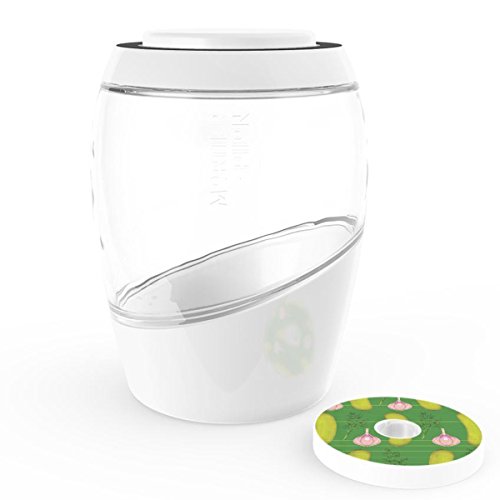
The Mortier Pilon Fermentation Crock at $89 occupies a specific niche: it is the best-looking functional fermentation crock on the market at a price that does not require a second mortgage. If you have avoided crocks because every stoneware option looks like something from a root cellar, this is the exception. The modern silhouette, matte exterior, and clean lines make it the kind of equipment you leave on the counter rather than hiding in a cupboard.
Behind the aesthetics is a genuine fermentation vessel: food-safe stoneware, a water-seal lid, and half-moon ceramic weights. The 5-liter capacity is the sweet spot for a household doing weekly batches — enough for three to four heads of cabbage, a full kimchi batch, or a combination of smaller projects rotating through simultaneously. The water-seal lid works identically to the German Gairtopf design that has been used for centuries: a channel around the lid holds water, CO2 bubbles out, oxygen cannot enter, and your ferment runs anaerobic from day one without any burping or surface monitoring.
The trade-offs are real. The Mortier Pilon is not dishwasher-safe, a limitation that matters after a sticky kimchi batch. At $89 it is considerably more expensive than the Kenley 4L that provides similar water-seal function for $55. And if build longevity is your priority over aesthetics, the Nik Schmitt Gairtopf at $149 is thicker-walled German stoneware that will outlast you. This crock earns its price for buyers who want fermentation that looks intentional in a modern kitchen.
Pros & Cons
Pros
- 5-liter capacity handles large batches — ideal for kimchi or sharing with multiple households
- Attractive modern design looks good on a kitchen counter or as a gift
- Water-seal moat built into the lid design prevents oxygen ingress
- Comes with two half-moon ceramic weights sized for the 5L interior
- Lead-free, BPA-free, food-safe stoneware throughout
Cons
- Heavier than comparable crocks when filled — not easy to move to the fridge
- Lid seal moat requires topping up with water during long ferments
- No recipe guide or beginner instructions included
Mortier Pilon 5L Fermentation Crock
Prices may change · Free shipping with Prime
Design & Build Quality
Mortier Pilon designed this crock as kitchen equipment first and fermentation vessel second, and it shows in every decision. The exterior has a matte stoneware finish in a neutral cream-gray that photographs well and complements modern kitchen aesthetics. The proportions are vertical rather than squat, which gives it a smaller footprint on the counter despite the 5-liter capacity. The lid has a smooth, clean profile without the chunky handles typical of traditional crocks.
The stoneware is food-safe and lead-free, essential for a vessel storing acidic brines for weeks. The interior glaze is smooth and consistent with no bare clay spots. Wall thickness is adequate but noticeably thinner than premium German crocks — the Nik Schmitt Gairtopf walls feel like structural stoneware; the Mortier Pilon feels more like refined ceramics. This is not a failure, but it matters: thicker walls provide better thermal mass, which means more stable fermentation temperatures in kitchens with significant temperature variation.
The water-seal lid fits precisely into a channel around the rim. Fill the channel with water and the lid creates a one-way gas barrier. CO2 produced during active fermentation bubbles through the water seal and escapes; oxygen and mold spores cannot travel backward. The included half-moon ceramic weights are a genuine improvement over stone weights: ceramic is denser, easier to clean, and does not absorb brine the way porous stone can over time.
The crock is not dishwasher-safe, which is a minor but real inconvenience. Kimchi paste and fermented brine leave residue that requires soaking, and hand-washing a stoneware crock after a garlic-heavy batch takes effort. Ohio Stoneware's traditional crocks handle the dishwasher fine; the Mortier Pilon requires hand care.
Performance & Specifications Deep Dive
Five liters is the practical capacity for a household that ferments regularly. A full 5-liter batch of sauerkraut uses three to four medium heads of cabbage, which produces approximately three to four liters of finished product after shrinkage — a month or more of supply for a two-to-four person household. For kimchi, 5 liters accommodates a full Napa cabbage batch with aromatics without packing so tight that brine cannot distribute evenly.
The water-seal performance is reliable and hands-off. During active fermentation in the first week, bubbles push through the water seal visibly and audibly — a useful indicator that the brine environment is anaerobic and active. After week one, fermentation slows and the visible bubbling stops; this is normal and does not indicate a problem. The moat should be checked weekly in dry climates or during heated-air winter months, as water evaporates and a low moat compromises the seal. Topping off takes ten seconds.
The ceramic half-moon weights fit the 5-liter interior well. For sauerkraut, the two weights placed flat across packed shredded cabbage keep everything below the brine line effectively. For whole pickles or larger vegetable pieces, the weights work less cleanly because the curved edges leave gaps where irregularly shaped vegetables can float. In practice, most fermenters use the weights with a small plate or a zip-lock bag filled with brine as a secondary press for whole-vegetable batches.
Fermentation speed depends on temperature, not the vessel — but the Mortier Pilon's moderate wall thickness means it tracks kitchen temperature more closely than thick-walled German crocks. In a 65-degree kitchen it ferments correctly; in a warm summer kitchen above 75 degrees, batches move faster and may develop more acidity than intended. Placing the crock in a cooler part of the kitchen or basement during active fermentation is worth the effort for consistent results.
Real-World Use Cases
The Mortier Pilon shines for home fermenters who care about kitchen aesthetics and want a vessel they will actually use consistently. A Brooklyn apartment cook reported that the Mortier Pilon was the first fermentation crock she did not hide in a closet — leaving it on the counter meant she thought about fermentation daily and rotated batches regularly, whereas previous crocks sat unused because out of sight was out of mind.
For sauerkraut, the 5-liter size is ideal. The capacity handles full batches without splitting across multiple vessels, and the water-seal design means no daily burping or surface management. The sequence is simple: shred cabbage, salt at 2% by weight, massage until brine releases, pack below the water line, add weights, fill the moat, and wait. The Mortier Pilon handles the rest.
For kimchi, the crock works well but requires more attention to packing. Whole Napa cabbage leaves with thick aromatics take up more volume per gram than shredded cabbage, so a 5-liter crock may require trimming larger batches. Some kimchi fermenters prefer the wide-mouth cylindrical shape of traditional Korean onggi pots; the Mortier Pilon's vertical proportions pack tightly but do not allow the same easy layering.
For gift-giving, this is the obvious choice in the mid-range fermentation crock category. The aesthetic presentation, clean packaging, and complete accessory kit make it a coherent gift that does not require the recipient to source weights or lids separately. The Ohio Stoneware crock at $35 is technically more affordable but arrives as crock only — the Mortier Pilon arrives ready to ferment.
Who Should Buy This (And Who Shouldn't)
Buy the Mortier Pilon 5L if you care about how your kitchen looks, you want a water-seal crock with ceramic weights that is complete out of the box, and you ferment regularly enough to justify the $89 price over the Kenley 4L at $55. It is right for home fermenters in modern kitchens who treat their equipment as part of the kitchen aesthetic, people making weekly sauerkraut or kimchi batches at household scale, and anyone shopping for a fermentation-focused gift at a price that feels intentional rather than budget.
Do not buy this crock if longevity is your primary concern — the Nik Schmitt Gairtopf at $149 is thicker German stoneware that will outlast a decade of weekly batches. Do not buy it if you need dishwasher-safe convenience; the hand-wash-only care requirement is minor for some cooks and a genuine inconvenience for others. Do not buy it if capacity is the priority: the Roots and Harvest 10-liter water-seal crock handles twice the volume at $130, a better investment if you are preserving garden harvests or feeding large households. And do not buy it if you are testing fermentation for the first time — the Ball 32oz kit at $22 or the Masontops Complete Kit at $38 are much lower-stakes entry points before committing to a ceramic crock.
Alternatives Worth Considering
The Kenley Fermentation Crock 4L at $55 is the honest comparison. Both are water-seal crocks with weights and complete accessory kits. The Kenley is smaller by one liter, uses stone weights instead of ceramic, and costs $34 less. For the function — water-seal lacto-fermentation — the Kenley does the same job. The Mortier Pilon earns its premium through aesthetics, ceramic weights, and slightly more capacity. If you are choosing on function alone, the Kenley wins; if kitchen presentation matters, the Mortier Pilon is worth the gap.
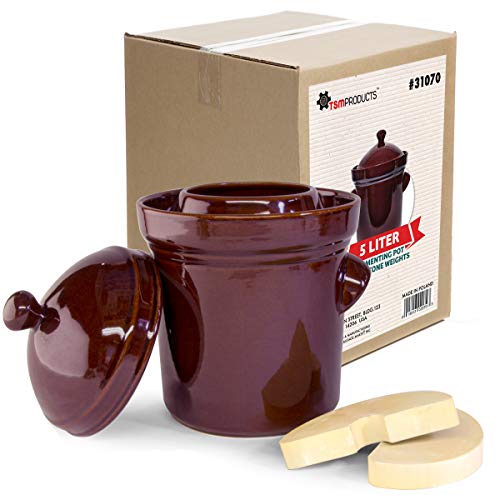
The TSM Products Polish Fermenting Crock at $70 is an interesting alternative for buyers who want beautiful stoneware without the water-seal design. The TSM is hand-crafted open-top stoneware with a rich Burnt Sienna glaze; it looks as good as the Mortier Pilon in a different way. The trade-off is active management: open-top fermentation requires daily Kahm yeast skimming and consistent brine level monitoring that the water-seal Mortier Pilon eliminates.
The Nik Schmitt Gairtopf 5L at $149 is the upgrade path. Same 5-liter water-seal format, but genuine German Gairtopf construction: substantially thicker walls, traditional deep-brown glaze, and decades of manufacturer history behind the design. The Nik Schmitt costs $60 more, is heavier to handle, and less modern-looking. If you are buying a crock you plan to use for twenty years and pass down, the Nik Schmitt is the choice. If you want function and aesthetics without the premium, the Mortier Pilon holds its own.
Our Verdict
The best mid-size water-seal crock for kimchi and larger sauerkraut batches. The modern aesthetic and generous 5L capacity make it an excellent gift pick.
Mortier Pilon 5L Fermentation Crock
$89
Prices may change · Free shipping with Prime
| Full Specifications | |
|---|---|
| Vessel Type | Water-Seal Crock |
| Capacity | 5L |
| Material | Stoneware |
| Water-Seal Lid | Yes |
| Weights Included | Yes |
| Stamper Included | No |
| Dishwasher Safe | No |
| Lead-Free Glaze | Yes |
| Made In | China |
Frequently Asked Questions
Is the Mortier Pilon 5L dishwasher-safe?
How full should I fill the water-seal channel?
Can I use this crock for kombucha or water kefir?
How does the 5-liter Mortier Pilon compare to the Kenley 4L for kimchi?
Related Buying Guides
Compare With Similar Fermentation Crocks
Head-to-Head Comparisons
Mortier Pilon 5L Fermentation Crock
$89
Prices may change · Free shipping with Prime