At a Glance
Best For
Overview
The Masontops Complete Fermentation Kit at $38 is a practical answer to the mason-jar fermenter's main problem: one jar is never enough. Once you discover you like lacto-fermented pickles, you want to run a sauerkraut batch simultaneously. Once you like sauerkraut, you want a kimchi batch alongside it. The Masontops kit gives you the lids, weights, and accessories to run multiple wide-mouth jars at once using jars you may already own.
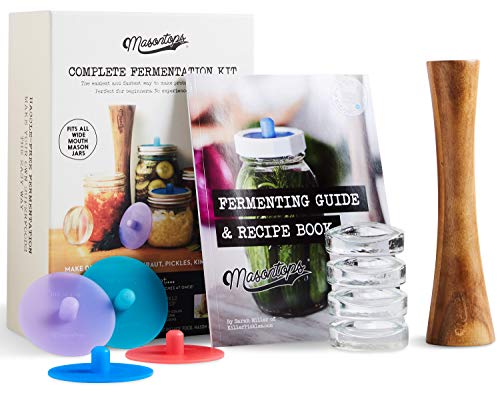
At its core, Masontops makes waterless airlock lids for wide-mouth mason jars. Their 'Pickle Pebble' glass weights sit inside the jar to keep vegetables submerged below the brine line. Their tamper packs shredded cabbage tightly before fermentation. The kit bundles these accessories with enough lids to run several batches in parallel, which changes fermentation from an occasional experiment to a rotation.
This is not stoneware and it is not a crock. Masontops is firmly in the mason-jar fermentation tier — portable, affordable, dishwasher-safe, and visually transparent. You can watch your ferment develop through the glass, which is useful when you are learning to identify normal cloudiness from unusual colors. The glass weights are a genuine improvement over the Ball kit's spring weight for irregularly shaped vegetables.
For households already comfortable with mason jars, the Masontops system extends existing equipment rather than replacing it. If you have a collection of wide-mouth quart and half-gallon jars, the kit turns them into a fermentation fleet at a fraction of the cost of buying dedicated crocks. The trade-off versus stoneware is capacity per batch — a wide-mouth quart is one liter — and aesthetics, which matter when equipment sits on the counter.
Pros & Cons
Pros
- Pickle Pipe lids are one-way airlocks — CO2 escapes automatically, no burping required
- Includes 4 lids, 4 glass pebble weights, and an acacia wood tamper/stamper
- Glass weights keep contact surfaces food-safe with no metallic taste
- Works with any standard wide mouth mason jar you already own
- Tamper/stamper included makes packing cabbage and dense vegetables easy
Cons
- Jars not included — you need to supply your own wide mouth mason jars
- Pickle Pipe membrane can crack if dropped or handled roughly
- Four-set means four small batches, not one large batch
Masontops Complete Mason Jar Fermentation Kit — Wide Mouth
Prices may change · Free shipping with Prime
Design & Build Quality
Masontops' waterless airlock lids are BPA-free plastic designed to fit standard wide-mouth mason jar openings. The airlock mechanism is a one-way valve embedded in the lid that releases CO2 pressure while blocking oxygen backflow. Unlike the Ball fermentation lid's spring-loaded valve, the Masontops design uses a simpler diaphragm that produces a quieter release without the clicking sound the Ball lid makes during active fermentation.
The Pickle Pebble glass weights are the standout component. These are glass discs sized to drop flat inside wide-mouth jars and rest across the top of packed vegetables. Glass weights outperform the spring weight in the Ball kit for most vegetables: they cover the full jar opening cross-section, so cabbage shreds and sliced vegetables stay uniformly submerged rather than finding gaps around a spring coil. The glass is heavy enough to hold position without floating, and it is completely non-reactive, non-porous, and dishwasher-safe.
The tamper is a narrowed wooden tool for packing shredded cabbage into jars before fermentation. For sauerkraut, massaging cabbage with salt releases brine — but packing that brine-wet cabbage into a jar tightly enough to eliminate air pockets requires firm pushing that fingers alone do not accomplish cleanly. The tamper fits the jar opening and packs effectively. For kimchi, which has thicker and more irregular vegetable pieces, the tamper is less useful but still helps consolidate volume.
The kit materials are durable for regular use. The plastic lids are rated for food contact and do not absorb fermentation odors with proper washing. Glass weights and the wooden tamper have indefinite lifespans with basic care. Replacement lids are available separately as the most wear-prone component.
Performance & Specifications Deep Dive
Masontops lids are compatible with wide-mouth quart (32oz, ~1 liter), wide-mouth pint (16oz, ~500ml), and wide-mouth half-gallon (64oz, ~1.9 liters) jars. The kit typically includes enough lids for two to four jars, enabling simultaneous batch rotation. Running a quart of sauerkraut, a quart of kimchi, and a pint of dill pickles simultaneously is the intended use pattern.
The waterless airlock lid performs well for lacto-fermentation at standard brine concentrations. At 2% salt by vegetable weight for sauerkraut or 2 to 3% dissolved brine for pickles and kimchi, the anaerobic environment establishes within the first 24 to 48 hours and the lid handles gas release passively. The absence of a water seal means there is no moat to fill or evaporation to monitor — a simplification that removes one maintenance step.
The glass Pickle Pebble weights rest flat across the jar interior and keep shredded vegetables submerged reliably. For Kahm yeast management — the white film that forms on open-to-air ferments — the sealed lid environment minimizes Kahm significantly compared to open-top crocks, though some appears if salt concentration is low or fermentation runs long. The glass weights themselves do not react with brine and do not harbor bacteria the way porous stone weights can.
Half-gallon jars are the practical upper limit for the Masontops system. A half-gallon of sauerkraut is approximately 1.9 liters — comparable to the Humble House SAUERKROCK 2L crock. For household-scale fermentation, a half-gallon jar with Masontops lids achieves similar output to a small dedicated crock at lower cost, though without stoneware's thermal stability.
Real-World Use Cases
The Masontops system excels for fermenters who want variety across multiple simultaneous batches. A Portland food blogger used Masontops kits across four wide-mouth quart jars simultaneously — sauerkraut, garlic dill pickles, jalapeños, and a ginger-carrot ferment — all running at different stages in rotation. The visual transparency of glass let her identify the garlic pickles turning an unusual brown (from garlic's natural reaction with trace metals, harmless) without opening the jar.
For beginners coming from a canning background, the Masontops system requires no new equipment acquisition. If you own wide-mouth mason jars for canning, the kit simply adds fermentation capability to existing inventory. This is the most significant advantage over buying a dedicated crock: zero new hardware to store, zero new learning about which jar types accept which lids.
The kit is well-suited to small urban kitchens where counter space is limited. Running three or four quart jars in a cabinet or on a refrigerator shelf requires less dedicated space than a single 5-liter crock on the counter. Ferments in glass jars are also easier to move to a cool basement or garage shelf during temperature control — a consideration for kitchens that run warm in summer.
For sauerkraut in volume, the Masontops system requires batch stacking across multiple jars that a single stoneware crock handles in one vessel. Making four quarts of sauerkraut simultaneously means filling and managing four jars, four weights, and four lids. The equivalent in a Kenley 4L crock is one vessel. Past a certain frequency of use, the convenience math shifts toward a dedicated crock.
Who Should Buy This (And Who Shouldn't)
Buy the Masontops Complete Kit if you already own wide-mouth mason jars, you want to run multiple different ferments simultaneously, or you prefer the visual transparency and portability of glass over stoneware. It is right for fermenters at the beginner-to-intermediate transition who are ready to move beyond a single Ball kit experiment into regular rotation, and for anyone who prioritizes flexibility over batch volume per vessel.
Do not buy this kit if you want to ferment in bulk. The quart jar capacity requires stacking multiple jars to match what a single 4 or 5-liter crock handles in one batch. If your goal is making a month's worth of sauerkraut in a single fermentation cycle, the Kenley 4L at $55 or the Mortier Pilon 5L at $89 are more appropriate. The Masontops system optimizes for variety and parallel experimentation, not volume efficiency.
Do not buy it if you want traditional fermentation aesthetics or a vessel that will outlast a decade of use. The plastic lids degrade over years; stoneware crocks do not. If you are choosing a fermentation vessel expecting to use it indefinitely, invest in stoneware from the start rather than treating the Masontops kit as a stepping stone you will eventually need to replace.
Alternatives Worth Considering
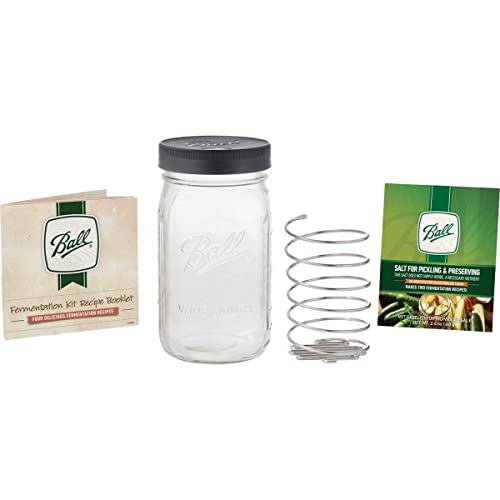
The Ball Fermentation Kit at $22 is the simpler alternative in the mason-jar tier. It provides one jar, one airlock lid, and one spring weight rather than Masontops' multiple lids and glass weights. If you genuinely want to test fermentation before committing to a multi-lid system, the Ball kit at $22 carries less financial risk. The Masontops kit at $38 makes sense once you know you want to run multiple batches simultaneously.
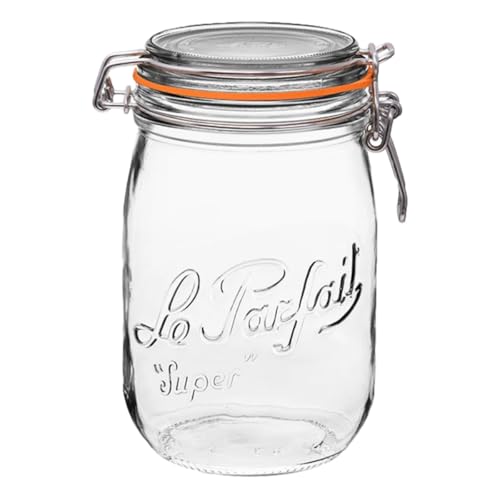
The Le Parfait Super Jar 1L at $20 is an alternative for buyers who want attractive glass storage rather than a dedicated fermentation system. Le Parfait's bail-top closure and orange rubber gasket is classic European aesthetics. For refrigerator pickles or short ferments, Le Parfait glass is beautiful and practical. For active multi-week lacto-fermentation, the Masontops waterless airlock lid outperforms the Le Parfait's static closure for gas management.
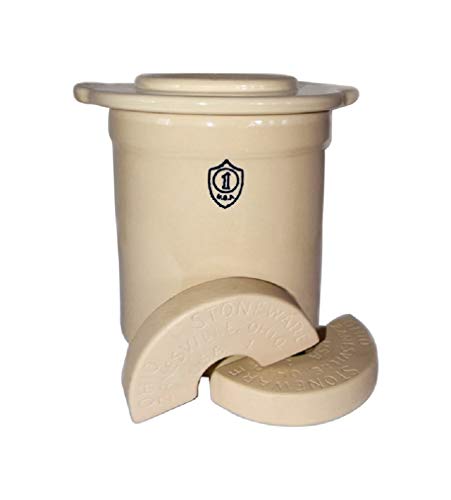
The Kenley Fermentation Crock 4L at $55 is the meaningful step up into dedicated stoneware. At $17 more than the Masontops kit, the Kenley provides four liters of stoneware fermentation capacity with a water-seal lid, stone weights, and tamper. For anyone running Masontops lids across four quart jars simultaneously — which equals roughly 4 liters of fermentation — the Kenley handles the same volume in a single vessel with better thermal stability and no plastic components. The Masontops system's advantage is flexibility; the Kenley's advantage is batch efficiency.
Our Verdict
The smartest upgrade for fermenters who already have mason jars. The Pickle Pipe airlock design is genuinely better than open-lid methods, and the glass weights are a quality touch.
Masontops Complete Mason Jar Fermentation Kit — Wide Mouth
$38
Prices may change · Free shipping with Prime
| Full Specifications | |
|---|---|
| Vessel Type | Mason Jar Kit |
| Capacity | 1L |
| Material | Glass |
| Water-Seal Lid | No |
| Weights Included | Yes |
| Stamper Included | Yes |
| Dishwasher Safe | Yes |
| Lead-Free Glaze | Yes |
| Made In | Canada |
Frequently Asked Questions
What size jars do Masontops lids fit?
How do glass weights compare to stone weights or the Ball spring weight?
Do I need to burp the jars with Masontops lids?
How many jars should I run simultaneously as a beginner?
Related Buying Guides
Compare With Similar Fermentation Crocks
Head-to-Head Comparisons
Masontops Complete Mason Jar Fermentation Kit — Wide Mouth
$38
Prices may change · Free shipping with Prime