At a Glance
Best For
Overview
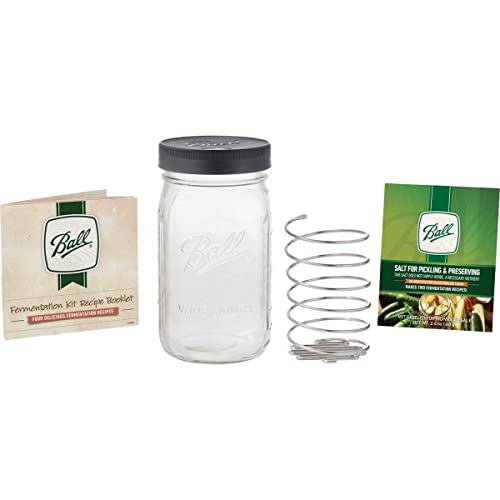
At $22, the Ball Fermentation Kit is the lowest-stakes entry point in home fermentation. You get a wide-mouth quart mason jar, a plastic fermentation lid with a built-in airlock, and a stainless steel spring weight. That is everything you need to ferment one quart of vegetables with no prior experience and no risk of ruining a $100 crock on your first attempt.
This matters more than it sounds. Fermentation has a learning curve: brine ratios, understanding Kahm yeast, reading the difference between normal fermentation smell and spoilage, knowing when to refrigerate. Every one of those lessons is cheaper to learn at $22 than at $89. The Ball kit absorbs beginner mistakes without buyer's remorse.
The 32-ounce capacity is one liter, which is genuinely small. A quart of sauerkraut feeds a two-person household for about a week and a half. You cannot fit a whole cucumber without splitting it. You cannot make a proper kimchi batch in one jar. The kit is designed for getting started, for tasting your first lacto-fermented pickle, and for deciding whether fermentation is something you want to pursue seriously before committing to stoneware.
For experienced fermenters, the Ball kit stays useful for recipe experimentation — running small test batches of new flavors before scaling a full crock — and for portability. It travels in a way a 5-liter crock never will. The stainless spring weight is clever engineering that keeps vegetables submerged in a wide-mouth jar without improvised weights. The airlock lid prevents the daily burping that standard mason jar lids require. At this price, the kit punches well above its weight class.
Pros & Cons
Pros
- Everything in one box: wide mouth quart jar, fermentation lid, stainless steel spring weight, and recipe booklet
- Ball brand reliability — the jar and lid use the same proven seal quality as Ball canning jars
- Spring weight holds vegetables below brine without fussing with heavy stones
- Compact quart size fits easily in a cabinet or fridge during cold ferment
- Under $25 — lowest cost of entry for any verified fermentation system
Cons
- Single-jar kit — serious batches require buying multiple units
- 32oz (1 quart) is small; a single cabbage produces more than this
- Spring weight is stainless steel, not glass — some fermenters prefer glass-only contact
Ball 32oz Wide Mouth Fermentation Kit
Prices may change · Free shipping with Prime
Design & Build Quality
Ball is the canonical American mason jar brand, and the 32oz wide-mouth jar in this kit is the same food-safe glass used for canning. Glass is chemically inert, does not absorb odors or flavors, and lets you monitor your ferment visually from outside the jar — a meaningful advantage when you are learning to read fermentation color, clarity, and bubble activity without disturbing the brine.
The fermentation lid is BPA-free plastic with a built-in waterless airlock channel. When CO2 pressure builds during active fermentation, the lid releases gas without letting oxygen back in. This is functionally different from a water-seal crock moat but achieves the same one-way valve principle. The airlock is self-contained and does not require a separate water fill, which makes it simpler to manage than a traditional water-seal but also means you lose the visible bubble-through-water feedback of a moat.
The stainless steel spring weight is the kit's most interesting component. It is a coil spring sized to the wide-mouth jar interior, compressed to the bottom during jar filling and released to apply upward pressure that keeps vegetables submerged below the brine line. Traditional methods use a smaller jar or a zip-lock bag of brine as a weight; the spring eliminates the improvisation. It works well for shredded vegetables like cabbage. For whole or large-cut vegetables, the spring can push irregularly sized pieces sideways rather than straight down, requiring some adjustment.
The glass jar is dishwasher-safe, the lid and spring are hand-wash recommended. Replacing the lid or spring is straightforward since Ball components are widely available. The kit's materials are durable for regular use, and replacement parts are accessible if the lid eventually degrades — a consideration that is irrelevant for stoneware but relevant for plastic-lidded glass kits used over years.
Performance & Specifications Deep Dive
One quart, or 32 ounces, translates to approximately one liter of packed vegetables and brine. For sauerkraut, that is roughly one-quarter of a medium cabbage head — enough for a week's serving for one person, or a few days for two. For dill pickles, four to six small Kirby cucumbers fit vertically if trimmed; full-size cucumbers require halving or quartering, which changes the texture of the finished pickle.
The airlock lid performs reliably for anaerobic fermentation. During active bubbling in the first few days, you will hear faint clicking as gas releases through the airlock valve. This is the system working correctly. Unlike mason jars sealed with standard canning lids — which must be burped daily to prevent pressure buildup — the Ball fermentation lid handles gas release passively. You do not need to loosen the lid daily, which also means you do not accidentally disturb the brine surface or introduce oxygen during the critical first week.
The spring weight holds shredded cabbage below brine effectively. For a standard 2% brine ratio — 20 grams of salt per kilogram of vegetables — the spring keeps the ferment submerged without additional intervention. Where the spring struggles is with buoyant whole vegetables like whole garlic cloves or cherry tomatoes, which fit around the spring coils and float to the top. In these cases, a small jar of water placed on top of the spring adds downward pressure.
Fermentation time follows standard lacto-fermentation timelines regardless of vessel: sauerkraut in 1 to 4 weeks at 65 to 72 degrees, pickles in 3 to 7 days, kimchi in 1 to 2 weeks. The glass jar's lack of thermal mass means temperature in the jar tracks ambient temperature more closely than stoneware, so placing the kit in a stable-temperature location — a pantry shelf away from the stove — gives more consistent results than a counter near heat sources.
Real-World Use Cases
The Ball kit's primary use case is the first ferment. A home cook in Denver who had read about fermentation for months but feared investing in stoneware started with the Ball kit, made a batch of dill pickles, and was fermenting weekly sauerkraut in a Kenley 4L crock within two months. The $22 kit gave her confidence and palate calibration before the larger commitment.
For ongoing use after that initial learning period, the Ball kit serves as a recipe laboratory. When you want to test a new kimchi spice ratio, a hot sauce flavor profile, or a vegetable combination you have not tried, running a small quart batch is lower waste than filling a 5-liter crock with an untested formula. Experienced fermenters often keep two or three Ball kits running simultaneously as flavor experiments alongside a main crock for standard production.
The kit is genuinely useful for apartment dwellers with limited counter space. A quart jar takes up a fraction of the real estate of a stoneware crock, stores in a cabinet during inactive periods, and produces enough output to maintain a consistent fermented condiment habit without requiring dedicated shelf space.
For kombucha, the Ball kit is not appropriate for primary fermentation — the SCOBY requires oxygen exposure — but the jar works for secondary fermentation after the SCOBY is removed, when you are carbonating in a sealed vessel. The fermentation lid makes secondary kombucha easier than a standard canning lid because it releases excess CO2 pressure automatically.
Who Should Buy This (And Who Shouldn't)
Buy the Ball Fermentation Kit if you have never fermented before, you want to test whether you enjoy the process before investing in stoneware, or you need small-batch fermentation for single-person use or recipe experimentation. It is right for apartment dwellers, skeptical beginners, and experienced fermenters who want a portable or compact secondary vessel for variety work.
Do not buy this kit as your only fermentation vessel if you already know you want significant volume. A quart of sauerkraut per batch will frustrate anyone cooking for more than one person regularly. If you are already past the beginner stage and want to invest in a real crock, start with the Kenley 4L at $55 — it includes a water-seal lid, stone weights, and a tamper in a vessel that handles real-household-scale batches. If you are buying for someone who cooks regularly and wants to get into fermentation seriously, the Masontops Complete Kit at $38 is a more complete entry-level gift.
Do not buy this kit expecting it to replace a dedicated crock for sauerkraut production. The 1-liter effective capacity means constant batch rotation if sauerkraut is a kitchen staple. Three Ball kits in rotation equals one Kenley 4L in convenience, at higher cost per batch and more daily management. The math favors the crock once you are past the testing phase.
Alternatives Worth Considering
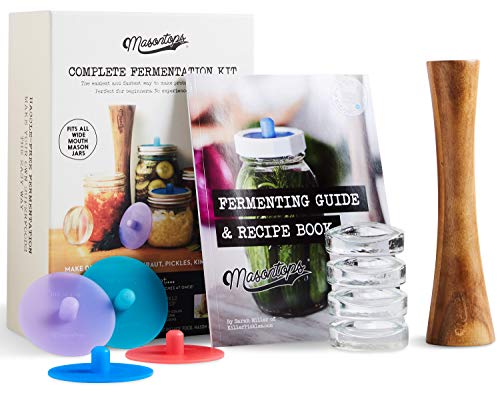
The Masontops Complete Fermentation Kit at $38 is the direct step-up from the Ball kit within the mason-jar tier. Masontops provides lids compatible with wide-mouth jars you already own, a waterless airlock design, and multiple lids so you can run batches in parallel. If the Ball kit's single-jar limitation is the main objection, Masontops addresses it with a multi-jar approach at modest additional cost.
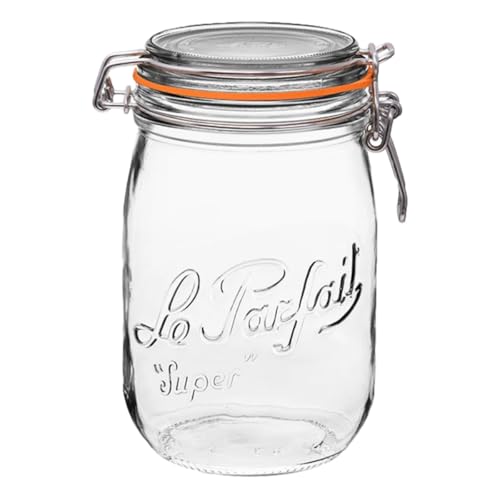
The Le Parfait Super Jar 1L at $20 is an interesting alternative at nearly the same price. French glass with a traditional bail-top wire closure and rubber gasket provides a classic aesthetic the Ball kit's plastic lid cannot match. For refrigerator pickles or short ferments, the Le Parfait is appealing. For active lacto-fermentation requiring consistent gas release, the Ball airlock lid outperforms the Le Parfait's static bail-top seal.
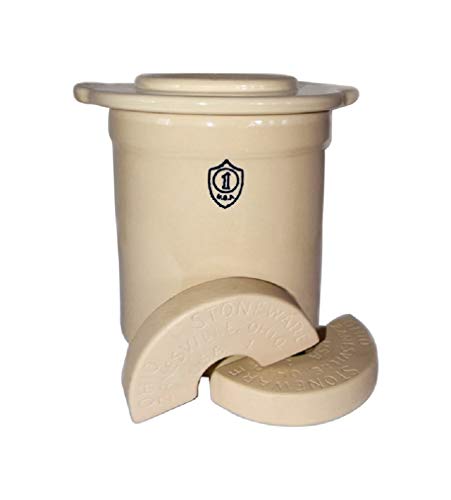
The Kenley Fermentation Crock 4L at $55 is the next meaningful step up — not an alternative but the logical destination after the Ball kit validates your interest. Four times the capacity, stoneware construction, water-seal lid, stone weights, and a tamper. At $33 more than the Ball kit, the Kenley is a committed purchase. If the Ball kit teaches you that you want to ferment weekly, the Kenley is where to go. If the Ball kit teaches you that fermentation is not for you, you are out $22 rather than $55.
Our Verdict
The easiest on-ramp for a first ferment. The Ball name means quality, the included spring weight actually works, and the price removes all excuses. Not for large batches.
Ball 32oz Wide Mouth Fermentation Kit
$22
Prices may change · Free shipping with Prime
| Full Specifications | |
|---|---|
| Vessel Type | Mason Jar Kit |
| Capacity | 0.95L |
| Material | Glass |
| Water-Seal Lid | No |
| Weights Included | Yes |
| Stamper Included | No |
| Dishwasher Safe | Yes |
| Lead-Free Glaze | Yes |
| Made In | USA |
Frequently Asked Questions
Does the Ball fermentation lid work with jars I already own?
How does the spring weight compare to the plate-and-rock method?
Can I ferment hot sauce in the Ball kit?
What is the difference between the Ball airlock lid and a water-seal crock moat?
Related Buying Guides
Compare With Similar Fermentation Crocks
Head-to-Head Comparisons
Ball 32oz Wide Mouth Fermentation Kit
$22
Prices may change · Free shipping with Prime