At a Glance
Best For
Overview
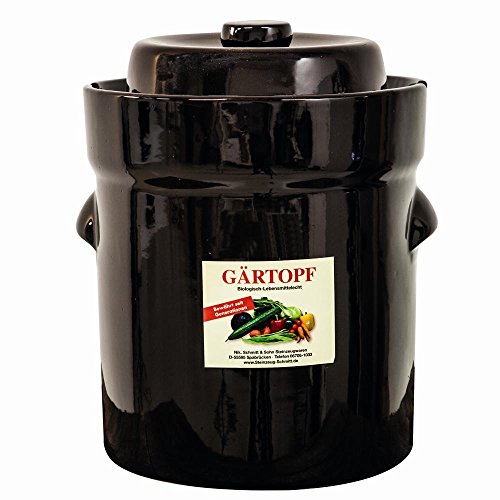
The Nik Schmitt Gairtopf 5L at $149 is the buy-once, keep-forever crock. This is German Gairtopf design — a water-seal fermentation vessel with centuries of refinement behind it — produced by a manufacturer whose design has not fundamentally changed because it did not need to. If you are the type of cook who buys a carbon-steel pan rather than a non-stick one, understanding that the initial investment pays off over decades of use, the Nik Schmitt is your fermentation vessel.
The Gairtopf design is simple: a cylindrical stoneware crock with a water-seal moat around the rim, a lid that rests inside the moat, and included stone weights sized for the interior. CO2 produced during fermentation bubbles through the water seal and exits. Oxygen cannot enter. The design requires no plastic components, no rubber gaskets, and no moving parts that wear out. The stoneware and the water moat are the mechanism. This is why Gairtopf crocks from the 1970s are still fermenting sauerkraut today.
At $149, the Nik Schmitt costs $60 more than the Mortier Pilon 5L, which provides similar capacity and a water-seal design with a more modern aesthetic. The difference is construction: the Nik Schmitt's walls are substantially thicker, its stoneware fired to higher density, and its design optimized for fermentation over aesthetics. The Mortier Pilon is beautiful kitchen equipment. The Nik Schmitt is a serious fermentation tool that happens to have a traditional aesthetic.
For the hobbyist fermenter making weekly sauerkraut, the price premium over the Kenley 4L or Mortier Pilon 5L is real. For the committed fermenter who calculates cost-per-use over a twenty-year horizon, the Nik Schmitt is a rational investment.
Pros & Cons
Pros
- German-made Gairtopf design with water-seal gutter — the original format that all water-seal crocks copy
- Thick, high-fired German stoneware is demonstrably more durable than Chinese alternatives
- Water seal gutter is wider and deeper than most competitors — significantly harder to accidentally drain
- 100+ year production history means the mold quality and fit-and-finish are exceptional
- The premium buy-it-for-life crock — owners report 20+ years of reliable use
Cons
- Expensive — typically $140–$170 for the 5L model
- Heavy shipping weight adds cost and handling difficulty
- Weights sold separately for some listings — verify before ordering
Nik Schmitt Gairtopf 5-Liter German Fermenting Crock Pot
Prices may change · Free shipping with Prime
Design & Build Quality
Nik Schmitt's Gairtopf crocks are produced in Germany to the same design that established the Gairtopf standard in European fermentation. The stoneware is high-fired, dense, and substantially heavier than comparable-capacity alternatives from North American and Asian manufacturers. Pick up a full Nik Schmitt 5L and pick up a Mortier Pilon 5L in succession — the weight difference is immediately apparent. Thick walls are not an accident; they are the core value proposition.
Wall thickness provides two direct benefits for fermentation. First, thermal mass: thick stoneware stores heat and resists temperature changes better than thin-walled alternatives, smoothing out daily ambient temperature variation in the kitchen. Stable fermentation temperature produces predictable, consistent results — the difference between two batches with similar timing and acidity versus batches that vary unpredictably. Second, durability: thick stoneware cracks less easily under thermal stress from temperature changes, dropping, or the rare accident of cold water on a warm crock.
The water-seal moat is machined to tight tolerances. The lid rim fits the moat precisely, creating minimal dead space between lid and moat walls. Fill the moat to the designated level, place the lid, and the seal is established without adjustment. The precision fit is a detail that distinguishes premium German manufacturing from more loosely toleranced alternatives.
The included stone weights and wooden tamper complete the kit. As with the Kenley and TSM, stone weights absorb brine odors over time and benefit from periodic vinegar soaking between strongly aromatic batches. The weights are sized and weighted appropriately for 5-liter capacity — substantial enough to hold a full sauerkraut or kimchi pack below the brine line without supplemental pressing.
Performance & Specifications Deep Dive
Five liters of fermentation capacity handles three to four medium cabbage heads for sauerkraut, a full Napa kimchi batch, or a generous mixed-vegetable ferment. This is identical to the Mortier Pilon 5L on paper. The practical difference is in how consistently the Nik Schmitt maintains fermentation conditions over extended batches.
The thick-walled Nik Schmitt is notably more temperature-stable than thinner crocks. In a kitchen where temperature cycles from 65 degrees overnight to 78 degrees midday in summer — a common scenario without climate control — the Nik Schmitt's walls absorb and release heat slowly, keeping the brine temperature several degrees closer to a stable midpoint than thin-walled alternatives. This translates to sauerkraut that ferments at a more predictable rate and achieves a more consistent acidity level between batches.
The water-seal mechanism performs reliably with appropriate moat maintenance. Check the moat level at each batch check — weekly during slow fermentation phases, every two to three days during the first week of active fermentation. The German-precision moat fit means a properly filled moat maintains an airtight seal without needing adjustment or correction between checks.
At 5 liters, the Nik Schmitt is sized for the household fermenter who makes regular batches but does not need commercial-scale output. Sauerkraut fermented for four weeks at 67 degrees — a textbook traditional German fermentation — produces approximately four liters of finished product, enough to supply two people eating ferments regularly for three to four weeks. The batch timing math works cleanly: one batch per month, four liters out, consistent supply.
The tamper is wooden and functional. Pack shredded salted cabbage in layers, tamping firmly between additions to eliminate air pockets and drive brine up from the salted cabbage. A properly packed Nik Schmitt crock requires less initial brine addition because the tamping process extracts sufficient natural brine from well-salted cabbage.
Real-World Use Cases
The Nik Schmitt is the crock of choice for fermenters who have been through the entry-level and mid-range options and arrived at the conclusion that they want permanent equipment. A Minneapolis home fermenter reported purchasing a Nik Schmitt Gairtopf after going through two plastic-lidded crocks that cracked and a Masontops mason-jar system that worked but felt impermanent. The Nik Schmitt has been in weekly use for seven years.
For traditional German sauerkraut — shredded cabbage at 2% salt, packed and weighted, fermented four to six weeks at cool-room temperature — the Nik Schmitt is as close to the historical production method as a home fermenter can get without an onggi pot or a purpose-built root cellar. The crock's thermal mass and water-seal design produce the slow, cool fermentation that German sauerkraut tradition developed around cool-cellar conditions. Fermented in a basement or pantry below 65 degrees Fahrenheit, the sauerkraut develops complex acidity and maintains crunch that faster, warmer fermentation cannot match.
For kimchi, the Nik Schmitt's 5-liter capacity handles traditional batches without modification. The water-seal design differs from the traditional onggi pot in that onggi is unglazed and slightly porous — some fermenters believe onggi pots allow micro-gas exchange that contributes to kimchi's distinctive flavor profile. In practice, modern kimchi fermented in the Nik Schmitt is excellent; the onggi comparison is a nuance that matters primarily to fermenters already optimizing at the advanced level.
For gift-giving at the premium tier, the Nik Schmitt is the answer when the recipient is a serious fermenter who will use the equipment for years. It ships in presentation packaging that conveys quality, and the German provenance and design heritage give the gift a story.
Who Should Buy This (And Who Shouldn't)
Buy the Nik Schmitt Gairtopf 5L if you ferment regularly and want permanent equipment, you care about thermal stability and consistent fermentation results over dozens of batches, you appreciate traditional German fermentation craft, or you are buying a premium gift for a committed fermenter. This is the crock for people who have fermented enough to know what they want and are done cycling through lower-tier equipment.
Do not buy the Nik Schmitt as a first crock. At $149, an untested interest in fermentation is an expensive experiment. Start with the Ball Fermentation Kit at $22 or the Kenley 4L at $55. If you ferment consistently for six months and find yourself wishing for better equipment, then the Nik Schmitt is the natural destination. Buying it first means you are paying a premium before you have validated the habit.
Do not buy it if volume is the priority. At 5 liters, the Nik Schmitt produces the same batch size as the Mortier Pilon 5L at $60 less. The Roots and Harvest 10L at $130 doubles the batch size at $19 less. The Nik Schmitt earns its premium through construction quality and fermentation performance consistency, not through capacity advantage. If your goal is maximum sauerkraut per dollar, the Roots and Harvest wins on volume and the Kenley wins on value.
Alternatives Worth Considering
The Mortier Pilon 5L at $89 is the most common alternative to the Nik Schmitt among buyers considering both. Identical capacity, water-seal design, ceramic weights rather than stone, and a modern aesthetic that photographs better in contemporary kitchens. The Mortier Pilon costs $60 less. The trade-off is wall thickness: the Mortier Pilon is considerably lighter and therefore less thermally stable than the Nik Schmitt. For casual home fermenters who ferment occasionally, this difference is academic. For regular fermenters who want batch-to-batch consistency, the Nik Schmitt's thermal mass produces measurably more consistent results.
The Roots and Harvest 10L at $130 is the alternative for buyers focused on volume. At $19 less than the Nik Schmitt, it provides twice the fermentation capacity in an American-made water-seal crock. The trade-off is German engineering refinement — the Nik Schmitt's moat tolerance and stoneware density are at a higher level. For homesteaders or large households, the Roots and Harvest's volume advantage justifies the trade. For quality-focused regular household fermenters, the Nik Schmitt wins.
For buyers who want the traditional Gairtopf design at 10-liter capacity from a German manufacturer, the Harsch crock — available through specialty kitchen importers at $180 to $250 in large formats — is the premium equivalent of the Nik Schmitt at scale. At 5 liters, the Nik Schmitt and Harsch occupy similar quality territory at similar price points, with Harsch traditionally priced at a slight premium for its brand recognition in German fermentation. If the Nik Schmitt is not available, Harsch is the comparable alternative.
Our Verdict
The best water-seal crock money can buy if you're committed to fermentation for life. The Gairtopf format is what every water-seal crock aspires to be. Justifies the price for serious fermenters.
Nik Schmitt Gairtopf 5-Liter German Fermenting Crock Pot
$149
Prices may change · Free shipping with Prime
| Full Specifications | |
|---|---|
| Vessel Type | Water-Seal Crock |
| Capacity | 5L |
| Material | Stoneware |
| Water-Seal Lid | Yes |
| Weights Included | Yes |
| Stamper Included | No |
| Dishwasher Safe | No |
| Lead-Free Glaze | Yes |
| Made In | Germany |
Frequently Asked Questions
Why does the Nik Schmitt cost significantly more than other 5-liter crocks?
How does Gairtopf design differ from standard water-seal crocks?
Is the Nik Schmitt worth the price upgrade over the Kenley 4L?
Can I use the Nik Schmitt for kimchi, not just sauerkraut?
Related Buying Guides
Compare With Similar Fermentation Crocks
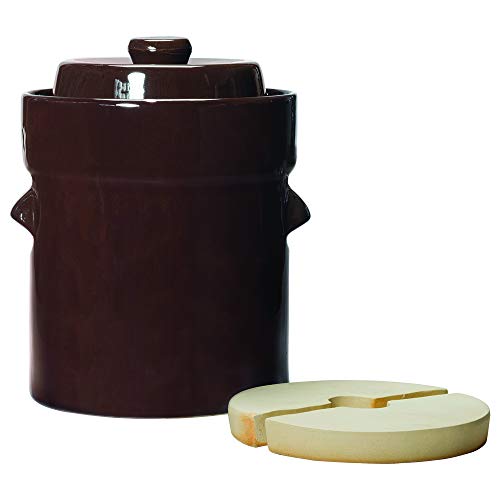
Roots & Harvest
Traditional Water-Seal Crock 10L
Water-Seal Crock · 10 L · Stoneware
$130
Head-to-Head Comparisons
Nik Schmitt Gairtopf 5-Liter German Fermenting Crock Pot
$149
Prices may change · Free shipping with Prime